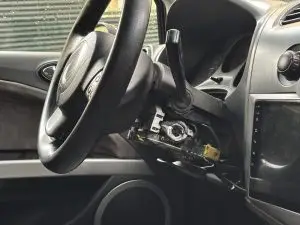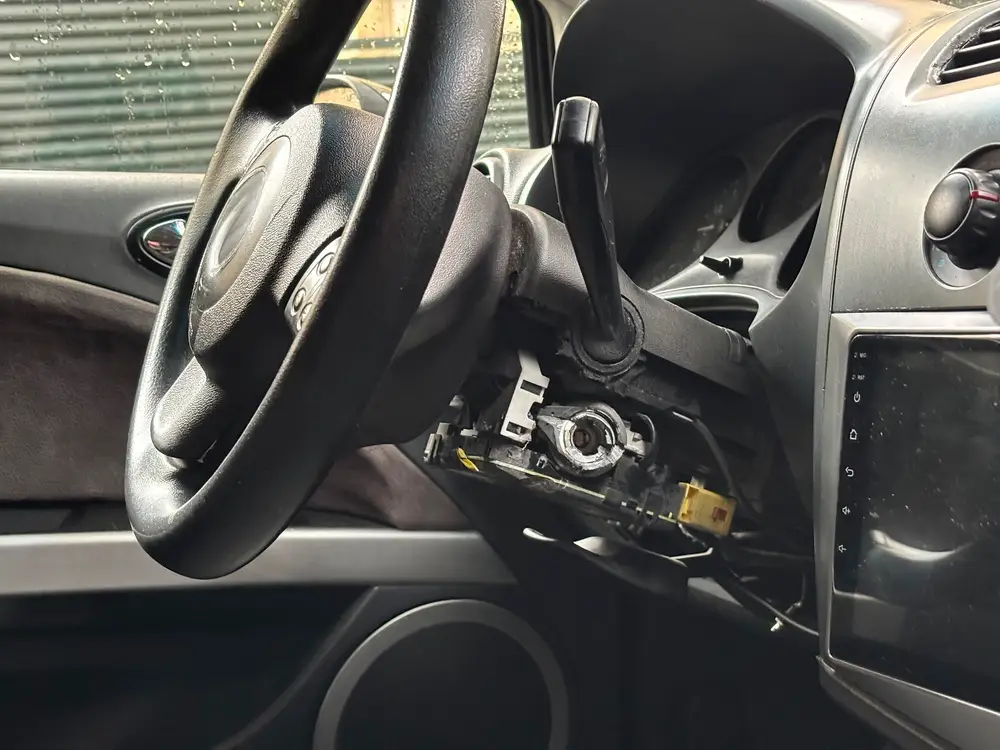
Calgary Lock Services gets this call often on cold mornings: the steering wheel locked solid, the key will not turn and the driver is sure something has broken. In most cases nothing is broken. A built-in anti-theft pin has engaged, and the wheel is pressing against it. This guide explains how the lock works, the gentle technique that releases it and the warning signs that mean the problem is deeper than a stuck pin.
How a Steering Wheel Locked in Place Actually Happens
Most cars with a metal key or a key fob have a steering column lock. When you remove the key and turn the wheel even slightly, a spring-loaded pin drops into a notch in the steering shaft. The wheel then refuses to move. The feature exists to stop thieves from driving away after forcing the ignition.
The trouble starts when you park with the wheels turned against a curb or load. Tension builds between the pin and the notch. When you return, the pin cannot retract because the wheel is holding it under pressure. The ignition cylinder stays stiff, and the key will not rotate.
Why it shows up more in winter
Cold stiffens ignition parts and thickens old lubricant. A pin that slides freely in July can bind on a minus 20 morning. Parking on a sloped Calgary street, or against a snowbank, adds the sideways force that jams the pin in place. That is why calls rise after the first hard freeze.
The Wiggle Technique That Frees a Steering Wheel Locked Tight
The fix takes about a minute and needs no tools. The goal is to take pressure off the pin while you turn the key. Do not rush it and never use brute force. A broken key in the ignition turns a simple problem into a repair.
1. Insert the key fully and keep it in the "off" position.
2. Hold the key with light pressure, as if you were about to turn it.
3. Turn the steering wheel gently toward the direction it will move, even a few millimetres.
4. While you hold that pressure, turn the key.
5. Once the pin lets go, the key turns and the wheel moves freely.
Try each direction before you give up. The wheel usually has a small amount of play to the left or right. You are trying to find the side where the pin relaxes.
Push-button start vehicles
Many newer cars use an electronic steering lock instead of a mechanical one. You press the start button while the fob is inside the cabin, and the lock motor releases. If the dash says "steering lock fault" or "turn the wheel," the wiggle still helps. If the message persists, the fob battery or the lock module may be failing.
Other Reasons the Key Will Not Turn
Not every stuck key is a steering lock issue. The wheel may feel loose, yet the key still refuses to rotate. In that case look at the key, the cylinder and the transmission. Each has a distinct pattern, and spotting it saves time.
| Symptom | Likely cause | What we do |
|---|---|---|
| Wheel is rigid, key will not turn | Steering pin under load | Guide you through the wiggle method |
| Wheel moves, key stuck | Worn key or damaged cylinder | Inspect and cut a new key or service the cylinder |
| Key turns, nothing happens | Dead battery or ignition switch fault | Test the electrical side before replacing parts |
| Key will not leave the ignition | Shifter not in park or interlock fault | Check the shift position and the release |
| Push-button car will not start | Weak fob battery or lock motor | Test the fob and reset the lock module |
Our guide to what to do when a key stuck in the ignition covers the last two rows in more depth.
Warning Signs That the Ignition Is Wearing Out
A steering wheel locked once in a while is normal. A steering wheel locked every morning is not. Frequent jamming points to wear inside the ignition cylinder. Worn tumblers stop aligning cleanly with the key, and the pin bites harder each time.
Watch for these signals, which tend to arrive together:
- The key needs jiggling to go in or turn.
- The key looks rounded or has shiny worn spots on its blade.
- The dash lights flicker when you move the key.
- You need two or three tries to start the engine.
A worn key often causes the problem, not the cylinder. A tired key can be replaced with a fresh cut, sometimes before the ignition ever needs service. Compare it against a spare. If the spare works smoothly, the original key is the culprit.
Transponder and chip issues
Most vehicles built after the late 1990s use a chip in the key head. If the car does not recognize the chip, it may start and then shut off, or refuse to crank. This is separate from the mechanical lock, but drivers often mix the two up. Our page on transponder key programming explains how the chip communicates with the car.
What Not to Do When the Wheel Is Locked
A few common reactions make matters worse. Avoid them even when you are in a hurry. Most ignition repairs we see began as a simple pin jam that someone forced.
- Do not use a pry bar or pliers on the key.
- Do not hammer the steering column.
- Do not spray heavy oil into the ignition slot.
- Do not keep cranking on the wheel while turning the key.
- Do not pull on the key if it feels bound.
Powdered graphite is the safe lubricant for cylinders. Oil collects dust and turns into a sludge in cold weather. If the key already feels gritty, a technician can clean and service the cylinder properly.
When to Call for Help With a Steering Wheel Locked or Ignition Trouble
Call if the wiggle method fails after several careful attempts, the key bends, or the key breaks off inside the cylinder. Also call if the problem repeats every few days. Repeat jams almost always mean a worn key or cylinder that will only get worse.
A mobile technician can come to the vehicle, so you do not need to tow it. We can inspect the cylinder, cut or program a replacement key and test the vehicle before you drive away. See our overview of automotive locksmith services for what can be done at your location. If you are fully locked out as well, our car lockout service is a better starting point.
The U.S. National Highway Traffic Safety Administration also offers general vehicle safety information if you want to learn more about anti-theft features and recalls.
Preventing the Problem Next Winter
A few habits cut the number of jams sharply. They take no extra time once they become routine. Straighten the wheels before you shut off the engine, and avoid parking with the wheel pressed hard against a curb.
| Habit | Why it helps | When to do it |
|---|---|---|
| Straighten the wheel before parking | Removes sideways load on the pin | Every time you park |
| Keep spare and main keys in good shape | Worn keys cause most jams | Check every autumn |
| Use graphite, not oil, in the cylinder | Prevents sludge in cold weather | Once a year |
| Replace the fob battery on schedule | Weak batteries confuse electronic locks | Industry estimate: every one to three years |
Frequently Asked Questions
Why did my steering wheel lock up while the car was parked?
The wheel was likely turned slightly after you removed the key. That engaged the anti-theft pin under tension. Relaxing the wheel while turning the key usually releases it.
Can a steering wheel lock damage my car?
The lock itself is not harmful. Forcing the key or the wheel can bend the key, damage the cylinder or break the lock pin. Gentle pressure is always safer.
What if my key breaks while I am trying to turn it?
Stop and do not push the broken piece deeper. A locksmith can extract the fragment and cut a new key, often at your vehicle. Keep the broken pieces if possible.
Is it a sign someone tried to steal my car?
Sometimes, but not often. If you see scratches around the ignition or a loose cover, have it inspected. Otherwise the cause is usually normal wear and tension on the pin.
Contact Calgary Lock Services
If the wheel will not release, we can help at any hour.
- Phone: (403) 870-4095
- Address: 307 Trafford Dr NW, Calgary, AB T2K 2T1
- Hours: open 24/7, Monday to Sunday